
Milan Chess Club

History
The Società Scacchistica Milanese, commonly known as the Milan Chess Club, is one of Italy’s most storied chess institutions. Officially founded in 1881, the club quickly became a cultural hub for intellectuals, artists, mathematicians, and strategists in the rapidly modernizing city of Milan. The late 19th century was a period of profound social and artistic growth for Northern Italy, and the club naturally aligned with this atmosphere—serving both as a competitive arena and a gathering place for the city’s vibrant thinkers.
In its early decades, the club hosted weekly soirées where games were played under candlelight, accompanied by classical music from nearby salons. Milanese newspapers began publishing the club’s annotated games as early as 1892, which greatly contributed to the rising popularity of chess across Lombardy. Several early Italian champions emerged from the club’s ranks, many of whom became founding members of regional chess committees and later the national federation.
During the interwar period, the club entered what many historians consider its “Golden Era.” It relocated to a spacious hall near Porta Venezia, where international players traveling through Italy often stopped for exhibitions and simultaneous displays. Famous grandmasters from Eastern Europe, notably visiting during their tours of Western Europe, left behind collections of games still studied by Italian enthusiasts today. The club cultivated a unique style—sharp, tactical play combined with deep endgame study—which became known as the “Milanese School.”
World War II disrupted the club’s activity, as its members were dispersed across the country. Still, the spirit of the Società Scacchistica Milanese survived. A small group of dedicated players secretly met in cafés, preserving their traditions even during the most difficult years. After the war, the club was officially re-established and quickly regained its status as a chess stronghold. By the 1950s, it became a recurring host for the Italian National Championship and the Milan International Open, events that drew hundreds of participants from across Europe.
The second half of the 20th century marked a period of modernization. The club introduced structured youth development programs, which produced several junior champions in the 1970s and 1980s. Its library—already one of the largest in Italy—was expanded with rare volumes, tournament bulletins, and annotated game collections. This archive, curated by club historians, became a reference point for Italian chess scholars.
With the digital era approaching, the Milan Chess Club embraced new ideas while maintaining its traditions. Throughout the 2000s, it launched one of Italy’s earliest online-to-offline chess initiatives: combining in-club tournaments with digital qualification stages. The club also partnered with universities and cultural centres, organizing lectures on the psychology of chess, artificial intelligence, and game theory. These events attracted not only competitive players but also researchers and students, further solidifying the club’s intellectual identity.
Today, the Società Scacchistica Milanese stands as a living monument to Italian chess heritage. Its halls continue to host local leagues, national events, and international opens. Young talents train alongside experienced masters; veterans analyze classical games; and new visitors instantly feel the weight of history in the room. Over more than 140 years, the club has preserved its original purpose: to celebrate the beauty of chess, unite generations, and inspire the future of the game in Italy and beyond.
Trophies
.jpg)
.jpg)

.jpg)
Statistics
Squad
| Player | Country | Title | Classical | Rapid | Blitz | Win / Draw / Loss | Peak Rating | Accuracy % | Errors | Color Perf (W/B) | Form (C/R/B) |
|---|---|---|---|---|---|---|---|---|---|---|---|
| Carlsen, Magnus |

|
GM | 2830 | 2805 | 2850 | 45/20/5 | 2882 | 92 | 0.8 | 60/40 | 45/20/5 |
| Ding, Liren |

|
GM | 2762 | 2740 | 2801 | 38/22/10 | 2816 | 89 | 1.2 | 55/45 | 50/10/5 |
| Nakamura, Hikaru |

|
GM | 2789 | 2752 | 2830 | 40/25/12 | 2816 | 90 | 1.0 | 50/50 | 12/8/20 |
| Nepomniachtchi, Ian |

|
GM | 2770 | 2745 | 2790 | 39/23/11 | 2785 | 88 | 1.3 | 55/45 | 9/33/17 |
| Caruana, Fabiano |

|
GM | 2786 | 2760 | 2815 | 41/20/12 | 2844 | 91 | 0.9 | 60/40 | 12/8/30 |
| So, Wesley |

|
GM | 2765 | 2738 | 2802 | 37/25/15 | 2790 | 89 | 1.1 | 52/48 | 13/25/14 |
| Firouzja, Alireza |

|
GM | 2777 | 2755 | 2820 | 36/26/14 | 2804 | 90 | 1.0 | 55/45 | 9/5/20 |
| Vachier-Lagrave, Maxime |

|
GM | 2743 | 2718 | 2785 | 35/22/15 | 2750 | 87 | 1.2 | 53/47 | 50/10/5 |
| Duda, Jan-Krzysztof |
|
GM | 2740 | 2715 | 2770 | 34/23/18 | 2758 | 86 | 1.3 | 50/50 | 34/14/5 |
| Giri, Anish |

|
GM | 2760 | 2735 | 2795 | 36/24/15 | 2776 | 88 | 1.1 | 54/46 | 10/8/20 |
| Radjabov, Teimour |

|
GM | 2731 | 2705 | 2760 | 33/25/18 | 2750 | 87 | 1.2 | 52/48 | 12/8/20 |
| Anand, Viswanathan |
|
GM | 2751 | 2720 | 2790 | 35/28/17 | 2817 | 89 | 1.0 | 55/45 | 15/35/10 |
| Abdusattorov, Nodirbek |
|
GM | 2757 | 2730 | 2805 | 34/26/15 | 2780 | 88 | 1.1 | 53/47 | 40/10/5 |
| Gukesh, Dommaraju |
|
GM | 2763 | 2738 | 2810 | 36/24/14 | 2785 | 90 | 1.0 | 54/46 | 7/25/18 |
| Praggnanandhaa, Rameshbabu |
|
GM | 2747 | 2720 | 2785 | 34/26/15 | 2765 | 88 | 1.2 | 52/48 | 12/8/30 |
| Wei, Yi |
|
GM | 2749 | 2725 | 2780 | 33/27/16 | 2775 | 87 | 1.1 | 53/47 | 50/10/5 |
| Topalov, Veselin |
|
GM | 2688 | 2650 | 2710 | 30/25/20 | 2816 | 85 | 1.4 | 50/50 | 45/20/5 |
Club news
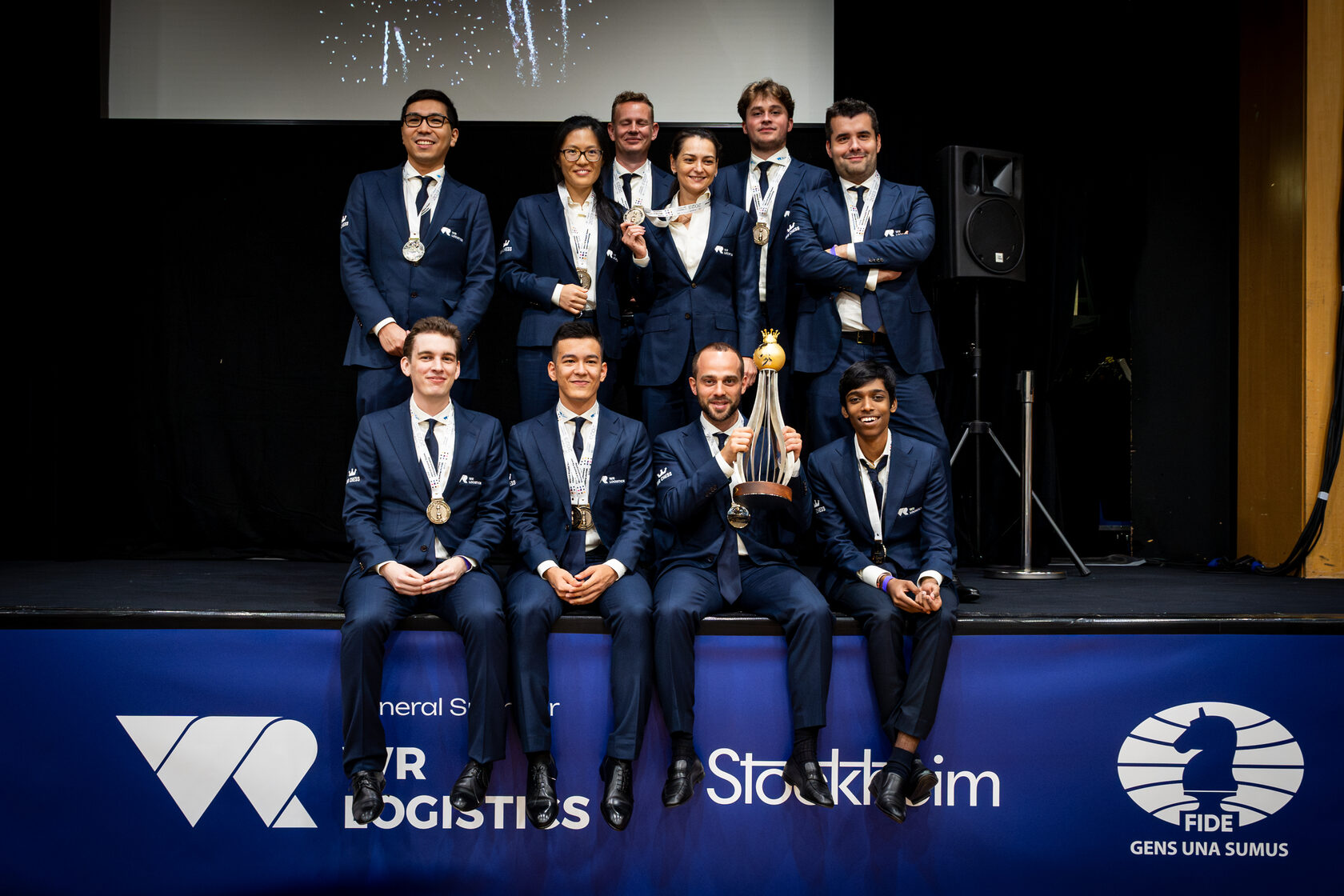
The Norwegian Grandmaster Magnus Carlsen dominated the recent national blitz tournament in Oslo, finishing with 9 out of 11 points. His precise calculation and deep understanding of complex middlegame positions allowed him to outplay his strongest opponents. Fans praised his ability to maintain calm under intense time pressure, showcasing why he remains one of the greatest chess players in history.

FIDE has unveiled plans for an international rapid championship to take place in Dubai next summer. Top grandmasters from all over the world will compete, with games broadcast live to millions of fans. The event promises a blend of intense competition, innovative formats, and opportunities for emerging players to shine on a global stage.
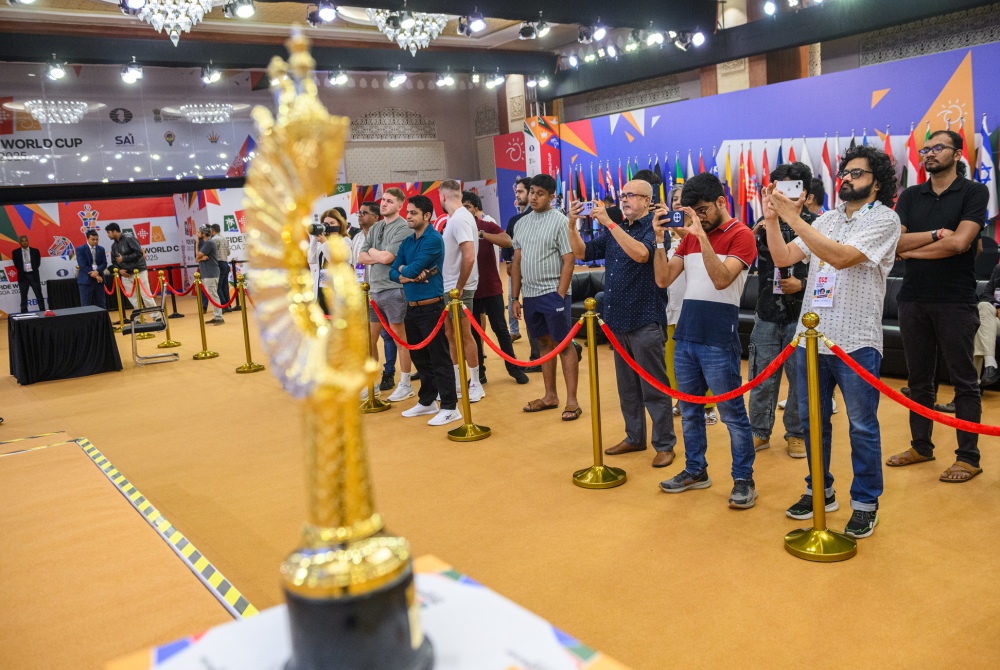
Alireza Firouzja has continued his meteoric rise, breaking into the top 5 in the FIDE world rankings. His aggressive and creative style has made him a fan favorite, while his consistent performance against elite players demonstrates remarkable maturity. Analysts suggest that Firouzja could soon challenge for the world championship if he maintains his current trajectory.
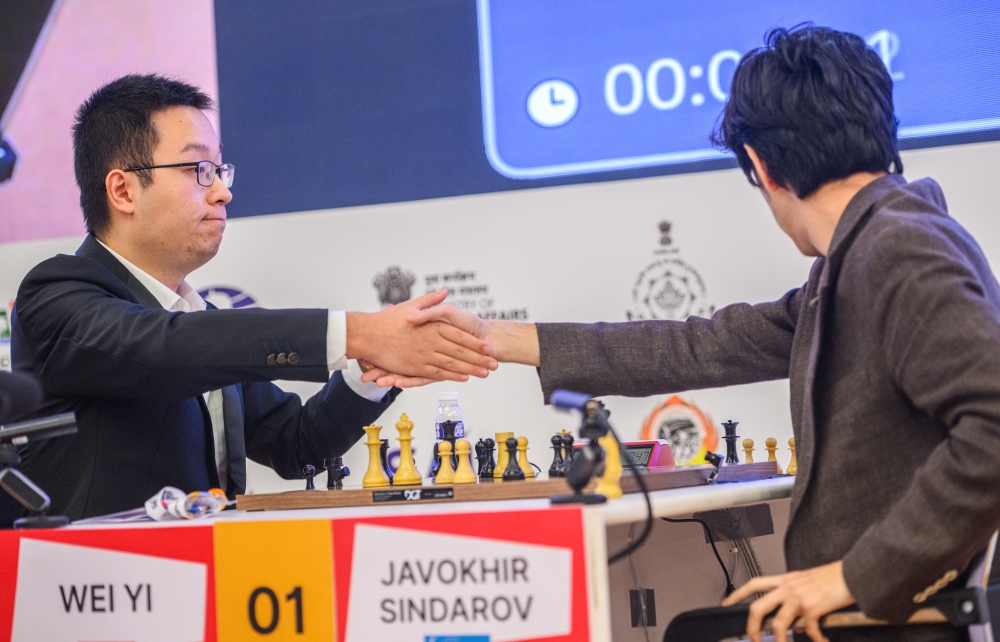
The semifinals of the Women’s World Chess Championship featured surprising results as lower-seeded players managed to upset former champions. The intense battles have highlighted the growing depth of talent in women’s chess worldwide. The upcoming final promises an exhilarating clash between experienced veterans and ambitious newcomers, keeping spectators on the edge of their seats.